I hear all this talk about RTI and understand that its an indication of your articulation however I have no idea what is a high or low rti. Ie is 500 good?
So whats a good RTI? Whats a bad RTI. Whats a stock sierra versus a stock GQ. A lifted GQ or a coilly sierra or an extreem comp rig etc.
Notice: We request that you don't just set up a new account at this time if you are a previous user.
If you used to be one of our moderators, please feel free to reach out to Chris via the facebook Outerlimits4x4 group and he will get you set back up with access should he need you.
If you used to be one of our moderators, please feel free to reach out to Chris via the facebook Outerlimits4x4 group and he will get you set back up with access should he need you.
Recovery:If you cannot access your old email address and don't remember your password, please click here to log a change of email address so you can do a password reset.
RTI ??
Moderators: toaddog, TWISTY, V8Patrol, Moderators



it is the proportion of the length of your vehicle up a ramp, expressed as a score out of 1000. so a score of 500 means you got half the length of your vehicle up the ramp. as NAM suggests, the score doesn't really tell you much because a shorty with poor articulation can outscore a long wheelbase with decent travel, and a wider vehicle will always score higher than a narrow one with the same suspension. you can also artificially increase your RTI significantly by deflating your tyres well below what is reasonable for any sort of actual driving, or in the case of leading arm coil setups like 80 series/patrol, dropping out the front bolt of the bottom (usually passenger side) leading arm to allow the front to open up, and with multi link systems like 80 series/patrol rears that rely on twist in the rubber bushes to allow articulation, loosening all the control arm mounting bolts to allow the inner crush sleeves to rotate in their mountings. the point is, RTI is a whole crock of poo, it doesn't tell you anything about how the car will drive or the ability of the driver.
Free air locker to the first 20 callers!

I disagree that RTI ramps are a crock of poo. they can be very useful to check how modifications are working, allow you to check clearances of components etc before hitting the trail. Yes thay are stupid as a comparison or bragging right between different cars. but if used as a testing apparatus then they are very useful
Ransom note = demand + collage
grimbo wrote:I disagree that RTI ramps are a crock of poo. they can be very useful to check how modifications are working, allow you to check clearances of components etc before hitting the trail. Yes thay are stupid as a comparison or bragging right between different cars. but if used as a testing apparatus then they are very useful
agreed, they are useful for testing mods on a particular vehicle, but they are pointless for comparing one rig with another.
Free air locker to the first 20 callers!

 Did you fall off or something


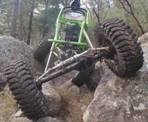
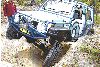
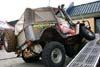
We recently had a ramp comp down here in Vic at USA 4x4. To the disgust of all the jeep owners (I was the only yota) I came second with a score of 1284 (20 degree). I suppose this is fairly decent for a leaf sprung swb with no drop arms or shackles.
www.4wdtv.com.au
SPOA FJ40, 400hp stroker, ARB locked x2, Silverstones, Superwinch, Narva lights, EFS springs, 1284 RTI...
SPOA FJ40, 400hp stroker, ARB locked x2, Silverstones, Superwinch, Narva lights, EFS springs, 1284 RTI...
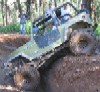
mudtoy wrote:We recently had a ramp comp down here in Vic at USA 4x4. To the disgust of all the jeep owners (I was the only yota) I came second with a score of 1284 (20 degree). I suppose this is fairly decent for a leaf sprung swb with no drop arms or shackles.
No one was disgusted...
You did forget to mention you were running zero air pressure in your opposing tyres and full pressure in the others to get a better score though

Busted!


Posts: 374
Joined: Tue Apr 06, 2004 5:08 pm
Joined: Tue Apr 06, 2004 5:08 pm
Location: North Western Sydney (its better than just western)
Contact:
mudtoy wrote:We recently had a ramp comp down here in Vic at USA 4x4. To the disgust of all the jeep owners (I was the only yota) I came second with a score of 1284 (20 degree). I suppose this is fairly decent for a leaf sprung swb with no drop arms or shackles.
You went up against jeeps in a yota, what did they excpect?

I dare you not read this signature.
MY45 wrote:redzook wrote:MY45 wrote:1000 on a 20 degree ramp is a good score i think my 40 ramps about 1300ish but havnt tested for ages.
damn thats pretty good whats ya wb?
97.5 i think .... so close to 100
Ill put it up the ramp and check it again coz i havn't done it for ages
thats like 43-44 inches off the ground nice

You have touched on something interesting here Redzook. RTI can easily be converted to vertical travel, and likewise vice versa, (with some trig. that I won't attempt to explain (I hate maths)
No one has yet mentioned that RTI can be used to measure and % of travel coming from the front end, IMHO a far more telling figure for capability than outright RTI.
If you compare the side angle of the body to the angle of the front diff, (assuming your'e in flat ground) the two figures can be used to provide a % of total travel by the front diff. IMHO, the idea should be to have the front suspension travel around 50% of the total travel of the car when the car is ramped driving forward up the ramp.
This will mean that the front will be a little softer and have a little bit lower roll stiffness than the rear. Generally, this will allow a car to climb predictably and with the minimum of fuss, for the given wheelbase and centre of gravity.
I have seen cars that have very impressive static travel, but terrible balance and very poor off road performance.
No one has yet mentioned that RTI can be used to measure and % of travel coming from the front end, IMHO a far more telling figure for capability than outright RTI.
If you compare the side angle of the body to the angle of the front diff, (assuming your'e in flat ground) the two figures can be used to provide a % of total travel by the front diff. IMHO, the idea should be to have the front suspension travel around 50% of the total travel of the car when the car is ramped driving forward up the ramp.
This will mean that the front will be a little softer and have a little bit lower roll stiffness than the rear. Generally, this will allow a car to climb predictably and with the minimum of fuss, for the given wheelbase and centre of gravity.
I have seen cars that have very impressive static travel, but terrible balance and very poor off road performance.
[quote="greg"] some say he is a man without happy dreams, or that he sees silver linings on clouds and wonders why they are not platinum... all we know, is he's called the stevie.[/quote]
Gwagensteve wrote:
I have seen cars that have very impressive static travel, but terrible balance and very poor off road performance.
like every 80/105 series landcruiser and GQ/GU patrol with a lift and no mods to the front suspension beyond coils/shocks/castor correction?
my 80 flexes pretty nicely especially in the rear but I think my bundera, which had terrible articulation, actually performed better (far more stable) off road, even though it was always putting a wheel in the air on one corner or another.
Free air locker to the first 20 callers!
dumbdunce wrote:Gwagensteve wrote:
I have seen cars that have very impressive static travel, but terrible balance and very poor off road performance.
like every 80/105 series landcruiser and GQ/GU patrol with a lift and no mods to the front suspension beyond coils/shocks/castor correction?
my 80 flexes pretty nicely especially in the rear but I think my bundera, which had terrible articulation, actually performed better (far more stable) off road, even though it was always putting a wheel in the air on one corner or another.
Bingo:D
Or anything with a 3, 4, 5, link in the rear and leaves in the front. My G has the same set up as the bundy (link wise), and has about 35" of articulation., the same front to rear and the same % front to rear, near enough. apart from some antisquat issues that would be very difficult to fix, it is predictable, balanced and simple.
[quote="greg"] some say he is a man without happy dreams, or that he sees silver linings on clouds and wonders why they are not platinum... all we know, is he's called the stevie.[/quote]

I agree that RTI scores on their own are a little overated but disagree that it is a crock of poo.
If a well setup truck can remain stable when it maxes out a ramp while another falls over after only getting half way up, what does that prove?
It proves that the more articulate truck is more stable than the other one in at least some offroad circumstances. And if careful consideration was given to roll centres etc when modifying the suspension the flexy truck may prove to be superior in all conditions. Just because the Americans overdid the ramp thing to death and are now bored with it doesn't mean that an RTI ramp cannot be a useful tool for suspension developement, as long as you know what you are doing.
If a well setup truck can remain stable when it maxes out a ramp while another falls over after only getting half way up, what does that prove?
It proves that the more articulate truck is more stable than the other one in at least some offroad circumstances. And if careful consideration was given to roll centres etc when modifying the suspension the flexy truck may prove to be superior in all conditions. Just because the Americans overdid the ramp thing to death and are now bored with it doesn't mean that an RTI ramp cannot be a useful tool for suspension developement, as long as you know what you are doing.
Ok ladies here they come....
All Measurements were taken reversing the drivers side up the ramp, beacuse it flexed the front more like it does offroad.
Total Vertical Wheel height was 43" which equaled a score of 1296 on a 20* ramp (going forwad was about 1120)
Here are some pics of how it all looked
http://www.villagephotos.com/viewpubimage.asp?id_=9964799&selected=1011058
http://www.villagephotos.com/viewpubimage.asp?id_=9964802
All Measurements were taken reversing the drivers side up the ramp, beacuse it flexed the front more like it does offroad.
Total Vertical Wheel height was 43" which equaled a score of 1296 on a 20* ramp (going forwad was about 1120)
Here are some pics of how it all looked
http://www.villagephotos.com/viewpubimage.asp?id_=9964799&selected=1011058
http://www.villagephotos.com/viewpubimage.asp?id_=9964802
----HillBilly Engineering----

RUFF wrote:My buggy ramps about 950 on a 20*. If i let the coils drop it would prob go 12-1300. But i can drive to the top of Sams 20* ramp without falling over which would be about 1500 if the wheel was still on the ground. Most rigs fall aver about 2" after they pick a wheel up on a ramp
should have a comp at the OWW of who can drive off the end of the ramp and stay on two wheels the longest

How does backing up a ramp flex the front more like it does off road?
I would have thought that generally, when negotiating obstacles, it is the front end that is high (as in you are climbing over/out of an obstacle or up a hill.
Personally, when I see a car backing up ramp to get a good (or balanced) RTI figure, It tends to indicate to me the typical setup of more travel in the rear then the front and much lower roll stiffness in the rear.
I would have thought that generally, when negotiating obstacles, it is the front end that is high (as in you are climbing over/out of an obstacle or up a hill.
Personally, when I see a car backing up ramp to get a good (or balanced) RTI figure, It tends to indicate to me the typical setup of more travel in the rear then the front and much lower roll stiffness in the rear.
[quote="greg"] some say he is a man without happy dreams, or that he sees silver linings on clouds and wonders why they are not platinum... all we know, is he's called the stevie.[/quote]
Gwagensteve wrote:How does backing up a ramp flex the front more like it does off road?
I would have thought that generally, when negotiating obstacles, it is the front end that is high (as in you are climbing over/out of an obstacle or up a hill.
Personally, when I see a car backing up ramp to get a good (or balanced) RTI figure, It tends to indicate to me the typical setup of more travel in the rear then the front and much lower roll stiffness in the rear.
I got all the measurements going forward and backwards but i think backwards was better indication because offroad i have to be carefull or the front tires will scrub on the guards, but forwards up the ramp didnt compress the fromt as much as it can....also because my cv is broken it kept on trying to roll ramp over, where as backwards i had the locker to drive up the ramp.
You could say i was cheating but i thought id put my best results up

----HillBilly Engineering----
Who is online
Users browsing this forum: No registered users and 2 guests