
Hi all,
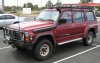
I have just sprayed a coat of primer putty on a body section of the G60, after doing all the rust and dent repairs. Bit of a learning curve! But definitely loving this low pressure gravity-fed spraygun; I wish I'd known to buy one years ago instead of the higher pressure sort I was trying to use.
Anyways... I started with a section that's not very visible, for practice... so now it is time to put the colour top coat on and since it's not very visible, I am not too worried about the finish, I just want to get the hang of spraying an even coat with no runs.
So my question is, can I spray the top coat straight over the primer or should I still give the primer a light sand first?
It's all acrylic.
Jason
Notice: We request that you don't just set up a new account at this time if you are a previous user.
If you used to be one of our moderators, please feel free to reach out to Chris via the facebook Outerlimits4x4 group and he will get you set back up with access should he need you.
If you used to be one of our moderators, please feel free to reach out to Chris via the facebook Outerlimits4x4 group and he will get you set back up with access should he need you.
Recovery:If you cannot access your old email address and don't remember your password, please click here to log a change of email address so you can do a password reset.
Do I need to sand the primer/putty
Moderators: toaddog, TWISTY, V8Patrol, Moderators
Do I need to sand the primer/putty
This is not legal advice.

Always sand primer/putty (with wet & dry - 320 or finer and plenty of water). It is also a good idea to spray a light mist of black paint over the putty, so you can see where the low spots are (anywhere the black remains is a low spot). Also lets you check for pinholes/bubbles, which are common if you have sprayed it too thickly anywhere.
_____________________________________________________________
RUFF wrote:Beally STFU Your becoming a real PITA.
I would use 400 wet and dry and use lots of water so the paper doesn't clog up.....
Try not to rub through the putty primer as it will show through. Also use a large block and not just you hand. For minor marks that you didn't see before the primer you can use spot putty. Spot putty can be used in scratchs and chips and can be painted over.
The finished product is only as good as your prep work.
James
Try not to rub through the putty primer as it will show through. Also use a large block and not just you hand. For minor marks that you didn't see before the primer you can use spot putty. Spot putty can be used in scratchs and chips and can be painted over.
The finished product is only as good as your prep work.
James
Yep, give it a guide coat with some black acrylic, then block it back with 320 first. Then guide coat it again, then 800 it for painting. Cant paint over 320. You can block the 800 but then do it by hand, rubbing sideways with the whole of your hand. Dont go backwards and forwards, it will leave impressions of your fingers and will show up after painting. What paint are you using?
Using acrylic.
I have been following the advice I've been getting in a general way, with a bit of common sense as well (I hope it's common sense...) and the results are looking pretty good so far.
It seems to be one of those things where you just have to do it to get a feel for it.
I have been following the advice I've been getting in a general way, with a bit of common sense as well (I hope it's common sense...) and the results are looking pretty good so far.
It seems to be one of those things where you just have to do it to get a feel for it.
This is not legal advice.
Yep. The best thing to remember though, is that the slightest imperfection you can feel/see in the putty, will really stand out once the (gloss) topcoat is applied. So it is true what they say about the preppwork being everything.chimpboy wrote: It seems to be one of those things where you just have to do it to get a feel for it.
Oh - and if you want a really good finish, do what BTGQ says above - final rub back with 800 - but for all the 4x4s I have fainted, I wasn't that fussy, just used 320 or 400 and it came up fine (until the next tree branch).
_____________________________________________________________
RUFF wrote:Beally STFU Your becoming a real PITA.
Yer, I bought this G60 for two hundred bucks, so it's definitely meant to be pretty rough and ready. I am using it for practice, next up I hope to do a project sports car where the finish will really matter.ISUZUROVER wrote:Yep. The best thing to remember though, is that the slightest imperfection you can feel/see in the putty, will really stand out once the (gloss) topcoat is applied. So it is true what they say about the preppwork being everything.chimpboy wrote: It seems to be one of those things where you just have to do it to get a feel for it.
Oh - and if you want a really good finish, do what BTGQ says above - final rub back with 800 - but for all the 4x4s I have fainted, I wasn't that fussy, just used 320 or 400 and it came up fine (until the next tree branch).
This is not legal advice.
I'm just wondering how what you're doing about the overspray and fume removal from the spraying? Have you set up any sort of exhuast fan or drop sheets etc?
I'm looking at repainting my Lux.
What compressor and spray gear are you using?
cheers.

I'm looking at repainting my Lux.
What compressor and spray gear are you using?
cheers.
[url=http://www.aussiebowhunter.com][b]Founder TBGA - September 29, 2001 - Australia's Premier Bowhunting Site[/b][/url]
When you are painting at home there is not much you can do besides wearing good breathing equipment while painting, and possibly wetting down the floor around you (or putting down drop sheets). That is why AFAIK it is illegal to spray 2-pack anywhere other than in a spray booth (but plenty of people do it).Bowhunter wrote:I'm just wondering how what you're doing about the overspray and fume removal from the spraying? Have you set up any sort of exhuast fan or drop sheets etc?
I'm looking at repainting my Lux.
What compressor and spray gear are you using?
cheers.
The good thing about acrylic is that it dries after it has travelled more than a metre or so.
_____________________________________________________________
RUFF wrote:Beally STFU Your becoming a real PITA.
It's not illegal to paint anything anywhere. It's more of an environmental issue. The only concern to you is the fumes from the thinners. Use a good respirator will be fine. If you think overspray around the shed is bad, imagine the inside of your lungs. Being acrylic, don't stress about shite in the paint as you'll rub it back and hit it with the buff anyway. But do worry about paint landing on everything else in the shed. Therefore, mask everything on the car well. Having said that, don't mask around something that takes a minute to remove and mask up the hole instead.


Thats way to fine for acrylic mate you only need p1200 wet and use plenty of water with a little bit of car wash in it. This prevents the paper wearing out as quick. P2000 is what you use to denib 2 packs.chimpboy wrote:Speaking of this, what is the way to go here? 2000-grit wet-and-dry, followed by a buffer? Or is that totally wrong?BowTieGQ wrote:Being acrylic, don't stress about shite in the paint as you'll rub it back and hit it with the buff anyway.
BTW you are allowed to paint 2 pack paint out side a spray booth provided you don't spray for for than 10 minutes continusly a day. They where the rules back when I did my apprentaship but they may have changed a bit bit since than.

It's the leads in paint and the isocyantes in the hardeners that are the toxic chemicals you mainly have to worry about. Thinners is the least of your worries.
Cheers Mick.
Looking great chimpboy.
When I did OHS training (also a few years back) I was told that most OZ WHS acts make it illegal to spray isocyanate-based paints (2-pack) outside a booth unless there is a good reason for not doing so (e.g. you are painting something that won't fit in) - the parson doing the spraying must also wear air-supplied breathing apparatus.Mick. wrote: BTW you are allowed to paint 2 pack paint out side a spray booth provided you don't spray for for than 10 minutes continusly a day. They where the rules back when I did my apprentaship but they may have changed a bit bit since than.
_____________________________________________________________
RUFF wrote:Beally STFU Your becoming a real PITA.

They like to contradict themselves because I only did an OHS training myself about 2 years ago and it's definetly allowed for about 10 to 15 minutes a day. I've even had work cover walk past me while spraying 2 pack out side a booth and nothing was said.ISUZUROVER wrote:Looking great chimpboy.
When I did OHS training (also a few years back) I was told that most OZ WHS acts make it illegal to spray isocyanate-based paints (2-pack) outside a booth unless there is a good reason for not doing so (e.g. you are painting something that won't fit in) - the parson doing the spraying must also wear air-supplied breathing apparatus.Mick. wrote: BTW you are allowed to paint 2 pack paint out side a spray booth provided you don't spray for for than 10 minutes continusly a day. They where the rules back when I did my apprentaship but they may have changed a bit bit since than.
You are susposed to use an air fed though when using any type of 2 pack not that anyone does.
These are rules that are pumped into you from a young age when you do it as a full time job. The problem is as soon as you leave tec no one bothers to tell you the new rules and even if you ring work cover they don't even know.
Cheers Mick.
Who is online
Users browsing this forum: No registered users and 6 guests